
Delhi is not just a city; it is a living timeline of India itself. Ancient ruins stand beside roaring flyovers. Mughal domes rise behind glass towers. Political power, street food chaos, cultural richness, and daily struggle all collide here in one relentless rhythm. Known as the national capital of India, Delhi is far more than a seat of government. It is a city shaped by centuries of empire, migration, conflict, faith, and survival. These ten facts capture the real character of Delhi, not just what it looks like today, but what it has endured and what it continues to become.
1. Delhi has been rebuilt many times through history
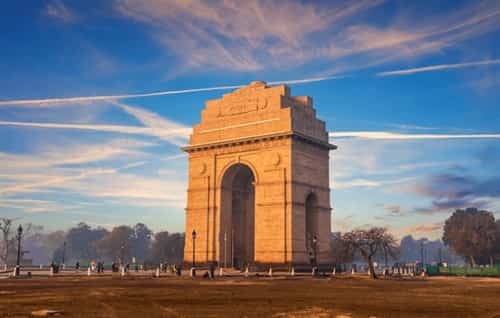
Delhi is not one city but a collection of many cities built over thousands of years. From the ancient settlement of Indraprastha mentioned in the Mahabharata to the Sultanate cities, Mughal Shahjahanabad, British New Delhi, and modern NCR — Delhi has risen, fallen, and risen again repeatedly. Few cities in the world have been destroyed and rebuilt so many times while remaining continuously inhabited.
2. From Delhi to New Delhi — a colonial legacy
When the British decided to shift India’s capital from Calcutta to Delhi in 1911, they built New Delhi as a grand imperial city. Wide avenues, monumental buildings, and administrative zones were created to display power and authority. After Independence in 1947, New Delhi became the capital of free India, while Old Delhi retained its dense Mughal-era character. Today, the two exist side by side as completely different worlds within the same city.
3. The political heart of the nation
Delhi is the centre of India’s political power. It houses the Parliament, Supreme Court, Rashtrapati Bhavan, Prime Minister’s Office, and all key national institutions. Every major political decision that shapes the country passes through this city. Protests, elections, debates, and diplomacy all find their stage here, making Delhi the nerve centre of governance.
4. One of the most multicultural cities in India
People from every state of India live and work in Delhi. Punjabis, Bengalis, Tamils, Gujaratis, Kashmiris, North Eastern communities, and many others have made the city their home over generations. This mixture has shaped Delhi’s language, food, festivals, and lifestyle. You can hear dozens of languages in a single metro ride and eat food from every region in one neighbourhood.
5. A city shaped by the Yamuna River
The Yamuna River is the geographical and historical lifeline of Delhi. Early settlements grew along its banks. The river supported agriculture, trade, and daily life for centuries. Over time, rapid urban growth and pollution severely damaged it, yet the Yamuna continues to remain central to Delhi’s identity. Its floodplains also play a crucial role in controlling floods and regulating climate.
6. A monument-rich open-air museum
Delhi is home to three UNESCO World Heritage Sites — the Qutub Minar, Red Fort, and Humayun’s Tomb. Along with these are hundreds of other monuments: tombs, stepwells, mosques, temples, and colonial structures scattered across the city. Few capitals in the world allow you to walk so easily through over a thousand years of architectural history.
7. Among the world’s most polluted capitals
Delhi struggles with severe air pollution, especially during winter months. Vehicle emissions, construction dust, industrial smoke, and crop burning in neighbouring states combine to create hazardous air quality. Smog frequently blankets the city, affecting health and daily life. Despite policy measures and public awareness, pollution remains one of Delhi’s biggest environmental challenges.
8. The Delhi Metro changed how the city moves
Before the Delhi Metro, commuting across the city meant endless traffic jams. The Delhi Metro Rail system, launched in 2002, transformed urban transport. It is now one of the largest and most efficient metro networks in the world. Millions of people use it daily for work, education, and travel, making it the backbone of the city’s public transport system.
9. The capital of street food and diverse cuisine
Delhi’s food reflects its history of migrations and empires. From Mughlai kebabs and butter chicken to chole bhature, momos, parathas, and chaat — the streets of Delhi are one long food festival. Old Delhi’s narrow lanes serve recipes passed down for generations, while modern cafes introduce global flavours. Food is not just sustenance here; it is culture, memory, and identity.
10. A city that survives every crisis
Delhi has witnessed invasions, partitions, riots, political upheavals, floods, and pandemics. The Partition of 1947 alone transformed its population overnight. Yet each time, the city absorbed the shock and rebuilt itself. This ability to endure and adapt is one of Delhi’s defining traits. It is a city shaped as much by survival as by power.
Conclusion
Delhi is not an easy city to live in, and yet it is impossible to ignore. It can feel overwhelming, polluted, crowded, and intense. At the same time, it is deeply historical, culturally rich, politically alive, and endlessly energetic. Its monuments whisper ancient stories while its roads roar with modern ambition. These ten facts show that Delhi is not defined by comfort or beauty alone. It is defined by continuity, resilience, and contradiction. And that is precisely what makes Delhi one of the most powerful and unforgettable cities in India.