
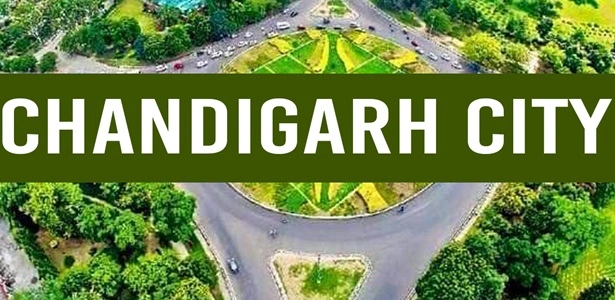
Chandigarh is a city that feels different the moment you enter it. The roads are wide and calm. The sectors are neatly numbered. Trees line the streets with quiet discipline. There is no chaotic old town, no medieval core, no crowded maze of centuries. Chandigarh was born in the 20th century with a clear purpose to be modern, orderly and forward-looking. Today, it stands as one of India’s best-planned cities, shaped by architecture, administration, and a strong civic sense. These ten facts reveal what truly defines Chandigarh.
1. India’s first planned modern city after Independence
Chandigarh was built after India gained Independence in 1947. When Punjab lost its historic capital Lahore to Pakistan during Partition, India needed a new capital for the Indian side of Punjab. The result was Chandigarh, a city planned from scratch to symbolise a new nation’s future. Construction began in the early 1950s, making it India’s first major planned city of the modern era.
2. Designed by the legendary architect Le Corbusier
Chandigarh is one of the world’s most important examples of modern urban architecture, designed by the famous Swiss-French architect Le Corbusier. He introduced a grid-based sector system, wide boulevards, green belts, and zoning for housing, shopping, education, and governance. His vision shaped the city into a living experiment of modern planning. Today, Chandigarh’s Capitol Complex is a UNESCO World Heritage Site.
3. A rare city that is capital of two states
Chandigarh holds a unique political status in India. It is the capital of both Punjab and Haryana, while also functioning as a Union Territory directly governed by the central government. This rare arrangement reflects the political reorganisation of northern India in 1966, when Haryana was carved out of Punjab.
4. A city designed in self-contained sectors
Chandigarh is divided into numbered sectors, each designed as a self-sufficient neighbourhood. Every sector has its own market, school, religious spaces, parks, and residential zones. This system allows daily life to function locally without long-distance travel. The grid-like layout also makes navigation easier than in most Indian cities.
5. One of the cleanest and greenest cities in India
Chandigarh consistently ranks among India’s cleanest and greenest urban centres. The city’s planning includes broad green belts, well-maintained parks, and strict building regulations. Sukhna Lake, Rock Garden green zones, and innumerable neighbourhood parks give the city a calm, breathable environment rarely found in large Indian urban areas.
6. The Rock Garden: a world-famous recycled art wonder
Chandigarh is home to the famous Rock Garden, created by Nek Chand using recycled industrial and domestic waste. What began secretly as a personal project turned into one of India’s most extraordinary outdoor art spaces. Sculptures made from broken bangles, tiles, bottles, and scrap metal now attract visitors from across the world.
7. A strong centre of administration and education
As a joint capital and Union Territory, Chandigarh is a major administrative hub. It houses High Courts, state secretariats, and central government offices. The city is also home to major educational institutions like Panjab University, PGIMER, and PEC University of Technology, making it an important centre of learning and medical research in northern India.
8. A city shaped by post-Partition migration
Chandigarh was built at a time when millions were displaced during the Partition of India. Refugees from West Punjab settled here in large numbers. The city became a symbol of resettlement, stability, and rebuilding after one of the most traumatic moments in Indian history. Its population carries the emotional memory of that period, even as the city itself looks modern.
9. High quality of life with controlled growth
Unlike many Indian metros, Chandigarh has grown under strict planning regulations. High-rise congestion is limited. Residential density is controlled. Traffic is orderly. Public services function with relative efficiency. Because of this, Chandigarh consistently ranks high in quality-of-life surveys across India.
10. A city that represents modern Indian discipline
Chandigarh is often seen as a reflection of discipline, civic sense, and organisation. People follow traffic rules more strictly. Markets close earlier than in most big cities. Public spaces are respected. The city moves at a calmer pace while maintaining strong administrative and economic functioning. It reflects a quieter, more structured version of urban India.
Conclusion
Chandigarh is not a city shaped by empires or centuries of organic growth. It is a city shaped by vision, design, and national rebirth. Born from the trauma of Partition and created as a symbol of India’s modern future, it stands today as a rare urban success rooted in planning rather than chaos. Its wide roads, green belts, and sectoral life show how cities can grow with order. These ten facts show that Chandigarh is defined by clarity, structure, and quiet efficiency. It may not have the noise of ancient capitals or coastal megacities, but it carries a distinctly modern Indian confidence — calm, steady, and enduring.