
Choosing the right board material is one of those decisions that quietly shapes your entire furniture experience. You may not see what’s inside a door or a cabinet, but it decides how strong it feels, how long it lasts, and how well it handles daily use. And when it comes to common choices, one confusion often comes up—block board or plywood?
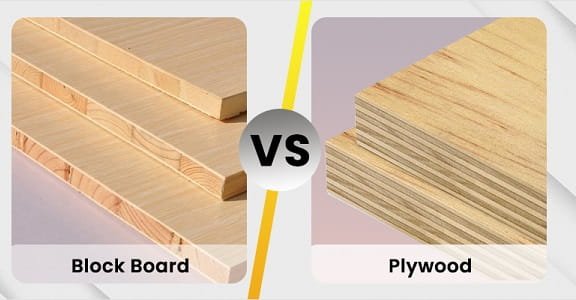
At first glance, both look similar. Flat sheets. Used in furniture, doors, panels. But internally, they are built very differently. One uses solid wooden strips inside. The other uses thin layers of wood bonded together.
This difference changes everything—strength, flexibility, durability, and even cost.
There is no single “better” option here. Some people prefer block board for lightweight and straight applications. Others trust plywood for its strength and long-term performance. It all depends on how you plan to use it.
So instead of guessing, let’s break this down clearly. By the end, you’ll know which one fits your project—not just what sounds better.
1. Material and Structure: The Core Difference
This is where the real difference begins.
Block board is made by placing solid wooden strips (usually softwood) side by side and then covering them with veneer layers on both sides. This gives it a thick, sturdy core.
Plywood is made by gluing together multiple thin layers of wood (veneers) in cross directions. This layered design gives it strength and flexibility.
Simple takeaway:
- Solid strip core → Block board
- Layered engineered structure → Plywood
2. Strength and Load Capacity
Both are strong—but in different ways.
Plywood is generally stronger overall. Its cross-layered structure distributes weight evenly, making it suitable for heavy loads and structural use.
Block board is strong too, especially in length, but it may not handle heavy loads as effectively as plywood in all directions.
Simple takeaway:
- Better overall strength → Plywood
- Good for moderate loads → Block board
3. Weight and Handling
This is where block board has an advantage.
Block board is lighter compared to plywood of similar thickness. That makes it easier to handle, transport, and install—especially for large panels or doors.
Plywood is heavier due to its dense layered structure.
Simple takeaway:
- Lightweight and easy to handle → Block board
- Heavier but stronger → Plywood
4. Resistance to Bending and Warping
Block board performs well in long applications.
Because of its solid core, block board resists bending over long spans. That’s why it is commonly used for doors and long panels.
Plywood is also resistant to warping, but in very long lengths, block board may perform better.
Simple takeaway:
- Better for long panels → Block board
- Stable in most conditions → Plywood
5. Moisture and Water Resistance
This is where plywood clearly takes the lead.
Plywood, especially BWR or BWP (marine grade), is highly resistant to moisture and water. It performs well in kitchens, bathrooms, and humid conditions.
Block board is more sensitive to moisture. If exposed to water, the internal wooden strips may swell or get damaged.
Simple takeaway:
- Better moisture resistance → Plywood
- Sensitive to water → Block board
6. Cost and Affordability
Block board is usually more affordable.
It provides a cost-effective option for furniture and interior work where extreme strength is not required.
Plywood can be more expensive, especially in higher grades like marine plywood.
Simple takeaway:
- Budget-friendly → Block board
- Higher cost (depends on grade) → Plywood
7. Best Use Cases
Block board is ideal for:
- Doors
- Long panels and shelves
- Lightweight furniture
Plywood is best for:
- Kitchen cabinets
- Heavy furniture
- Structural applications
Simple takeaway:
- Long, lightweight applications → Block board
- Strong, heavy-duty use → Plywood
Final Verdict: Which One Should You Choose?
There’s no single winner—and that’s exactly how it should be.
Pros of Block Board:
- Lightweight and easy to handle
- Good for long panels and doors
- More affordable
- Less bending in long sizes
Cons of Block Board:
- Less water-resistant
- Not ideal for heavy loads
- Can get damaged by moisture
Pros of Plywood:
- Strong and durable
- Excellent moisture resistance
- Suitable for heavy furniture
- Long-lasting performance
Cons of Plywood:
- Heavier
- More expensive (in higher grades)
- Slightly harder to handle
Choose block board if:
- You need lightweight material
- You’re making doors or long panels
- You want a budget-friendly option
Choose plywood if:
- You need strength and durability
- You’re working in kitchens or влаж conditions
- You want long-term reliability
In the end, this choice is less about which material is “better” and more about where you plan to use it. Some materials perform better in specific situations. Others offer overall reliability.