
Buying marble is not just about picking a stone. It’s about deciding the look, feel, and long-term character of your space. Flooring, walls, countertops—marble quietly defines the entire mood of a home. And when it comes to choosing, most people get stuck at one classic question—Indian marble or Italian marble?
At first glance, the difference feels obvious. Italian marble looks premium, smooth, and glossy. Indian marble feels more natural, slightly textured, and traditional. But once you go deeper, the choice becomes less about appearance and more about durability, cost, maintenance, and practicality.
There is no one-size-fits-all answer here. A luxury home might demand the elegance of Italian marble. A practical, long-lasting home might benefit more from Indian marble. It all depends on how you live and what you expect from your space.
So instead of rushing into a decision, let’s break this down properly. By the end, you’ll know exactly which one fits your needs—not just your first impression.
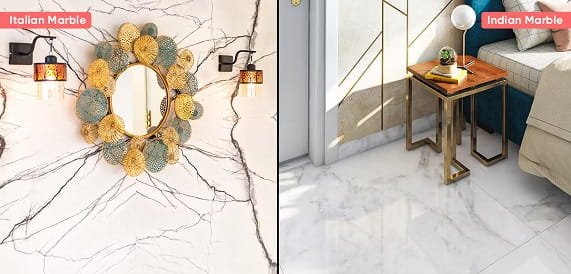
1. Appearance and Finish: The First Impression
This is where Italian marble usually takes the lead.
Italian marble is known for its smooth texture, high gloss, and elegant veining. It gives a rich, luxurious look that instantly elevates interiors. That’s why it’s often used in high-end homes, hotels, and showrooms.
Indian marble has a more natural and earthy appearance. The patterns are less dramatic, and the finish is not as glossy as Italian marble. But it has its own charm—simple, warm, and timeless.
Simple takeaway:
- Want luxury and shine → Italian marble
- Prefer natural and subtle look → Indian marble
2. Durability and Strength: Long-Term Reality
This is where Indian marble clearly stands strong.
Indian marble is harder and more durable. It can handle heavy usage, foot traffic, and daily wear without losing its strength. That makes it ideal for homes where durability matters more than looks.
Italian marble is softer. While it looks stunning, it is more prone to scratches, stains, and wear over time. It needs careful handling and maintenance to stay beautiful.
Simple takeaway:
- Need strong, long-lasting stone → Indian marble
- Okay with delicate material → Italian marble
3. Cost and Budget: The Deciding Factor
For most people, this is where the decision becomes clear.
Indian marble is much more affordable. It offers good quality at a reasonable price, making it a practical choice for large areas.
Italian marble is expensive. Import costs, premium quality, and brand value all add up. It’s often chosen more for luxury than necessity.
Simple takeaway:
- Budget-friendly option → Indian marble
- Premium budget available → Italian marble
4. Maintenance and Care
Marble is not a “fit and forget” material. But the level of care differs.
Indian marble is easier to maintain. It is less porous, so it absorbs less water and stains. Regular cleaning is usually enough.
Italian marble is more porous. It can absorb liquids and stains quickly if not sealed properly. It also needs periodic polishing to maintain its shine.
Simple takeaway:
- Want low maintenance → Indian marble
- Ready for regular upkeep → Italian marble
5. Availability and Variety
India has a wide range of marble available locally—Rajasthan being the main source. Colors, patterns, and finishes are easily accessible, and supply is consistent.
Italian marble, on the other hand, is imported. While it offers unique patterns and premium quality, availability can sometimes depend on imports and market demand.
Simple takeaway:
- Easy availability → Indian marble
- Exclusive designs → Italian marble
6. Installation and Handling
Indian marble is easier to install. It is thicker and stronger, so it can handle cutting and fitting without much risk of damage.
Italian marble requires expert handling. Since it is softer and often thinner, improper installation can lead to cracks or damage.
Simple takeaway:
- Simple installation → Indian marble
- Skilled installation needed → Italian marble
7. Suitability for Indian Conditions
This is an often overlooked but important point.
Indian marble is naturally suited to local climate conditions. It handles heat, dust, and daily wear quite well.
Italian marble, while beautiful, may not always adapt easily to rough usage or extreme conditions without proper care.
Simple takeaway:
- Suitable for Indian lifestyle → Indian marble
- Best for controlled, premium interiors → Italian marble
Final Verdict: Which One Should You Choose?
There’s no single winner—and that’s exactly how it should be.
Choose Indian marble if:
- You want durability and long life
- You have a practical budget
- You prefer low maintenance and reliability
Choose Italian marble if:
- You want a premium, luxurious finish
- You’re ready to invest more
- You can maintain it properly over time
In the end, this choice is less about which marble is “better” and more about what suits your lifestyle. Some people want elegance that stands out. Others want strength that lasts quietly for years.
Pick the one that matches how you live—not just how you want your home to look.