
Choosing the right wood for furniture is not just about price or looks. It’s about how the material behaves over time—how strong it stays, how it reacts to weather, and how much care it demands. And when it comes to commonly used furniture woods in India, one comparison often creates confusion—rubber wood or sheesham wood?
At first glance, the difference feels obvious. Sheesham wood carries a rich, premium feel with strong grain patterns and a long history in Indian furniture. Rubber wood, on the other hand, is lighter, more affordable, and often seen in modern, budget-friendly designs.
But once you go deeper, the gap becomes more interesting. Strength, durability, termite resistance, cost, maintenance, and even environmental impact—everything starts to matter.
There is no single “better” option here. Some people choose sheesham for its strength and traditional appeal. Others prefer rubber wood for its affordability and eco-friendly nature. It all depends on how you plan to use the furniture and what you expect from it over time.
So instead of jumping to a quick decision, let’s break this down properly. By the end, you’ll have a clear understanding of which wood suits your needs—not just what looks better at first glance.
1. Strength and Durability: The Real Difference
This is where sheesham wood clearly takes the lead.
Sheesham, also known as Indian rosewood, is a hardwood known for its strength and durability. It can handle heavy weight, rough use, and long-term wear without losing its structure. That’s why it is often used for beds, dining tables, and solid furniture pieces.
Rubber wood is comparatively softer. It is strong enough for everyday furniture but may not handle heavy loads or rough usage as well as sheesham.
Simple takeaway:
- Heavy-duty, long-lasting furniture → Sheesham wood
- Light to medium use → Rubber wood
2. Termite and Pest Resistance
This is a crucial factor in Indian conditions.
Sheesham wood has natural resistance to termites and pests. It performs well even without heavy chemical treatment.
Rubber wood is more prone to termite attacks if not properly treated. Most rubber wood furniture is chemically processed to improve its resistance, but quality can vary.
Simple takeaway:
- Natural resistance → Sheesham wood
- Needs proper treatment → Rubber wood
3. Appearance and Aesthetic Appeal
Both woods offer very different looks.
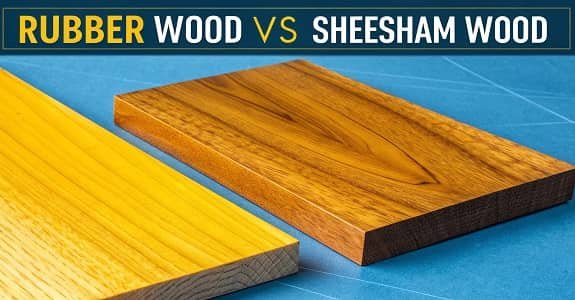
Sheesham wood has a rich, dark tone with strong, visible grain patterns. It gives a premium, traditional, and elegant feel that many people associate with solid wood furniture.
Rubber wood has a lighter color and a more uniform texture. It looks simple and clean, making it suitable for modern and minimal designs.
Simple takeaway:
- Premium, rich look → Sheesham wood
- Simple, modern look → Rubber wood
4. Cost and Affordability
This is where rubber wood becomes attractive.
Sheesham wood is more expensive because of its durability, quality, and demand. It is considered a premium material.
Rubber wood is much more affordable. It offers a good option for those who want wooden furniture without spending too much.
Simple takeaway:
- Budget-friendly → Rubber wood
- Premium investment → Sheesham wood
5. Maintenance and Care
Sheesham wood is relatively low maintenance. It can last for years with basic care like occasional polishing and cleaning.
Rubber wood requires more attention. It needs proper finishing and protection to maintain its durability and avoid damage from moisture or pests.
Simple takeaway:
- Low maintenance → Sheesham wood
- Needs regular care → Rubber wood
6. Moisture and Weather Resistance
Sheesham wood performs better in varying weather conditions. It is less likely to warp or crack when exposed to humidity.
Rubber wood is more sensitive to moisture. Without proper treatment, it can swell or get damaged in humid environments.
Simple takeaway:
- Better moisture resistance → Sheesham wood
- Sensitive to humidity → Rubber wood
7. Sustainability and Environmental Impact
This is where rubber wood has an edge.
Rubber wood is considered eco-friendly because it comes from rubber trees that have completed their latex-producing cycle. Instead of cutting trees just for timber, this wood is reused.
Sheesham wood, while durable, comes from hardwood trees that take longer to grow, which raises sustainability concerns if not sourced responsibly.
Simple takeaway:
- Eco-friendly choice → Rubber wood
- Depends on sourcing → Sheesham wood
8. Workability and Usage
Rubber wood is easier to work with. It is softer, making it suitable for modern furniture designs and machine processing.
Sheesham wood is harder and heavier, which makes it slightly more difficult to shape but ideal for strong, long-lasting furniture.
Simple takeaway:
- Easy to design and shape → Rubber wood
- Strong but harder to work → Sheesham wood
Final Verdict: Which One Should You Choose?
There’s no single winner—and that’s exactly how it should be.
Pros of Rubber Wood:
- Affordable and budget-friendly
- Eco-friendly and sustainable
- Smooth and uniform texture
- Easy to work with
Cons of Rubber Wood:
- Less durable than hardwoods
- Needs treatment for termites
- Sensitive to moisture
- Requires more maintenance
Pros of Sheesham Wood:
- Very strong and long-lasting
- Naturally resistant to termites
- Rich, premium appearance
- Low maintenance
Cons of Sheesham Wood:
- Expensive
- Heavy and harder to work with
- Limited availability in some regions
- Requires responsible sourcing
Choose rubber wood if:
- You want affordable wooden furniture
- You prefer modern, simple designs
- You’re okay with regular maintenance
Choose sheesham wood if:
- You want strong, long-lasting furniture
- You prefer a premium, traditional look
- You want low maintenance and durability
In the end, this choice is less about which wood is “better” and more about how you plan to use it. Some people want furniture that lasts for decades without worry. Others want something stylish and affordable that fits their current needs.