
When it comes to choosing a main door, this is not just about design—it’s about security, durability, maintenance, and long-term value. And that’s exactly why many homeowners get stuck between two options—steel door or wooden door?
At first glance, wooden doors feel warm, traditional, and premium. Steel doors feel modern, strong, and secure. But once you start thinking practically—weather, termites, cost, and lifespan—the decision becomes more layered.
Both have their place. Both can be excellent choices. But they are built for different priorities.
So instead of guessing, let’s break this down properly. By the end, you’ll know which one actually suits your home—not just what looks better.
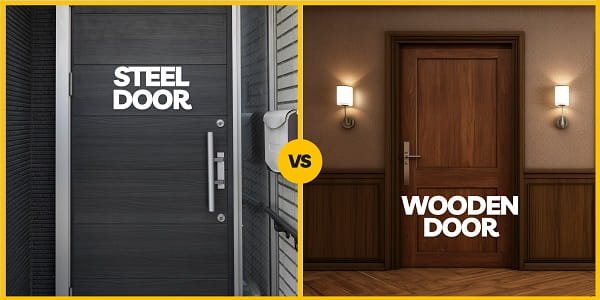
Top Real Examples (Market Products)
Prime Gold Steel Safety Door · ₹37,107
Heavy-duty galvanized steel door designed for high security and weather resistance.
Handcrafted Solid Wood Door · ₹20,999
Traditional solid wood door offering natural aesthetics and premium craftsmanship.
Product Comparison Table
| Attribute | Steel Door
₹37,107•amazon.in |
Wood Door
₹20,999•ddassstore.com |
| Material | Galvanized steel | Natural wood (teak, sheesham, etc.) |
| Strength | Very high | High |
| Security | Excellent | Moderate |
| Water Resistance | High | Low to moderate |
| Termite Resistance | 100% resistant | Needs treatment |
| Maintenance | Low | High |
| Cost | Moderate | Moderate to high |
| Lifespan | 20–40+ years | 15–30+ years |
1. Strength and Security: The Biggest Difference
This is where steel doors clearly dominate.
Steel doors are built for strength. They are hard to break, often come with multi-lock systems, and are widely used for security purposes.
Wooden doors are strong, especially hardwood ones, but they are easier to damage compared to steel.
Simple takeaway:
- Maximum security → Steel door
- Good but not highest security → Wood door
2. Durability and Lifespan
Both last long—but in different ways.
Steel doors are highly durable and resistant to weather, corrosion, and physical damage when properly coated.
Wooden doors can also last decades, but they depend heavily on maintenance and environment.
Simple takeaway:
- More consistent durability → Steel door
- Long life with care → Wood door
3. Water, Weather, and Termite Resistance
This is where steel has a huge advantage.
Steel doors are weatherproof, rust-resistant (if coated), and completely termite-proof.
Wooden doors can absorb moisture, swell, crack, or get attacked by termites if not treated properly.
Simple takeaway:
- Best for all weather → Steel door
- Needs protection → Wood door
4. Appearance and Aesthetic Appeal
This is where wood clearly wins.
Wooden doors have a natural grain, rich texture, and premium look. Each piece is unique and gives a classic feel.
Steel doors are improving in design and even come with wood-like finishes, but they still feel more modern and less natural.
Simple takeaway:
- Premium, natural beauty → Wood door
- Modern and stylish → Steel door
5. Maintenance and Care
Steel doors are easier to live with.
They require minimal maintenance—just basic cleaning. No polishing, no termite treatment.
Wooden doors need regular polishing, protection from moisture, and sometimes repairs.
Simple takeaway:
- Low maintenance → Steel door
- High maintenance → Wood door
6. Cost and Value for Money
This depends on what you compare.
Basic wooden doors can be affordable, but high-quality wood (like teak) becomes very expensive.
Steel doors usually fall in the mid-range but offer better value due to durability and low maintenance.
Simple takeaway:
- Better long-term value → Steel door
- Wide price range → Wood door
7. Fire Resistance and Safety
Steel doors offer better safety.
They are fire-resistant and do not burn easily, making them safer in emergencies.
Wooden doors are flammable and can be damaged by fire.
Simple takeaway:
- Safer in fire → Steel door
- Vulnerable to fire → Wood door
8. Insulation and Comfort
This is where wood has a slight edge.
Wood is a natural insulator. It helps maintain indoor temperature and reduces noise.
Steel doors often come with insulation cores, but metal itself can conduct heat.
Simple takeaway:
- Better natural insulation → Wood door
- Good with added insulation → Steel door
9. Best Use Cases
Steel doors are ideal for:
- Main entrance doors
- Apartments and flats
- Security-focused homes
- Commercial spaces
Wooden doors are best for:
- Interior doors
- Premium villas
- Decorative entrances
- Traditional homes
Simple takeaway:
- Security and durability → Steel door
- Style and tradition → Wood door
Final Verdict: Which One Should You Choose?
There’s no single winner—and that’s exactly how it should be.
Pros of Steel Doors:
- Very strong and secure
- Weatherproof and termite-proof
- Low maintenance
- Fire-resistant
- Long-lasting
Cons of Steel Doors:
- Less natural look
- Can feel industrial
- May heat up in sunlight
Pros of Wooden Doors:
- Premium and natural appearance
- Good insulation
- Custom design options
- Traditional appeal
Cons of Wooden Doors:
- High maintenance
- Sensitive to moisture and termites
- Expensive (good quality wood)
- Less secure than steel
Final Choice
Choose a steel door if:
- You want maximum security
- You prefer low maintenance
- You need durability in all weather
Choose a wooden door if:
- You want premium aesthetics
- You value natural material and design
- You’re ready to maintain it regularly
Bottom Line
If your priority is security and practicality, steel is the smarter choice.
If your priority is beauty and tradition, wood still stands strong.
In the end, the best door is not the one that looks good today—it’s the one that still works perfectly years later.